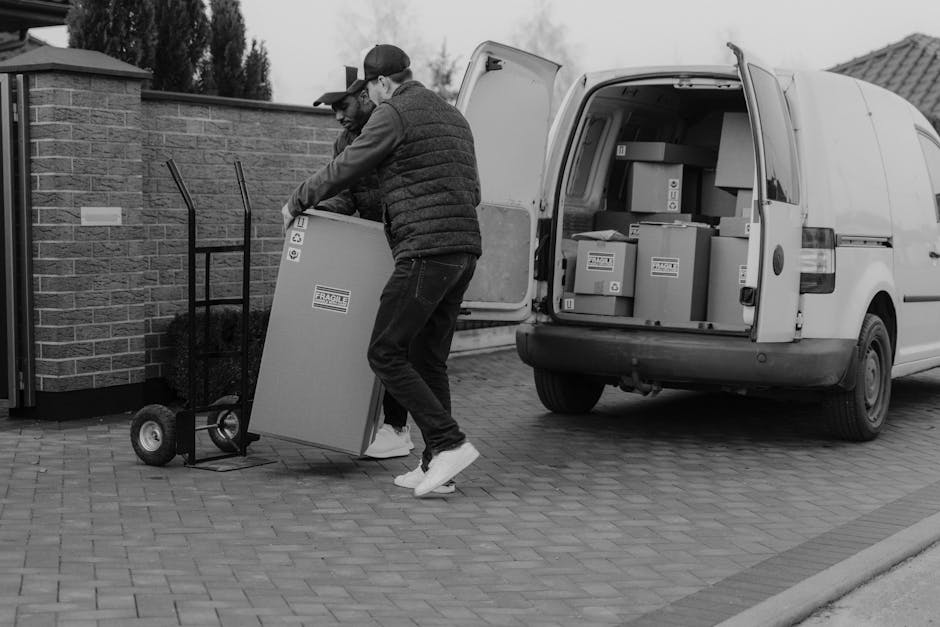
Blackstock Road man and van tips for narrow access moves

Moving on or near Blackstock Road can be straightforward on paper and awkward in real life. The road itself, the side streets, the parking situation, tight stairwells, awkward doorways, and the usual London "just one more thing" can all turn a simple man and van job into a careful bit of logistics. If you are planning a narrow access move, the right Blackstock Road man and van tips can save time, reduce damage, and make the whole day feel much less fraught.
In this guide, we'll walk through the practical side of moving with limited access: how to assess the space, how to prepare the property, what to tell your mover, and which mistakes tend to cause the biggest headaches. You'll also find a comparison table, a real-world example, and a checklist you can actually use. No fluff. Just the stuff that matters when a van cannot simply pull up, unload, and be done with it.
Why Blackstock Road man and van tips for narrow access moves Matters
Narrow access moves are where little details become big ones. A van that is perfectly suitable for a standard flat move can become awkward if the driver cannot park close enough, the hallway is tight, or the access point is shared with neighbours, bins, bikes, or the usual jumble of London street life. Blackstock Road and the surrounding streets can be busy, and once you add real-world access limitations, the margin for error gets smaller very quickly.
That is why good planning matters more than bravado. A smooth move is rarely about muscle alone. It is about measurement, timing, loading order, communication, and knowing when a smaller vehicle or a different approach is smarter than trying to "make it work". To be fair, that last part saves a lot of stress.
Narrow access moves also matter because they affect other things beyond convenience. They can change the labour required, the time on site, the risk of scratching walls or stair rails, and even whether certain furniture can move in one piece or needs partial dismantling. If you are moving in or out of a flat, student place, basement property, or a house with limited frontage, planning for access is not optional. It is the move.
If you are still comparing your options, it can help to look at broader support pages such as services overview and man and van support in Finsbury Park, especially if your move may need more than a simple lift-and-load job.
How Blackstock Road man and van tips for narrow access moves Works
A narrow access move usually works best in stages rather than as a single all-at-once task. First, the mover assesses the access. Then the route from the property to the van is checked. After that, the load plan is built around what can be carried safely through the tightest points. Finally, loading happens in a careful sequence so the items nearest the drop-off point come off first. Simple in theory, a bit fiddly in practice.
The key is understanding where the bottleneck is. Sometimes it is the street itself, where parking is limited or the van must stop some distance away. Sometimes it is the entrance: a narrow hallway, steep steps, a tight turn at the landing, or a shared doorway that makes furniture handling slower. In a few moves, the problem is not the building at all, but the route from the van to the door, with curbs, uneven paving, or awkward gate access.
Good man and van teams usually work with a few practical habits:
- They pre-check access details before the day.
- They bring the right loading aids, straps, blankets, and trolleys if the route allows them.
- They break the move into manageable runs rather than trying to carry everything in one push.
- They protect corners, bannisters, and flooring where sensible.
- They keep fragile or awkward items separate from the heavier load.
If you are moving a flat, it can be worth reading about flat removals in Finsbury Park because the same access logic applies on Blackstock Road: stairwells, entry points, and careful carrying all shape the day.
Truth be told, the people who get the best results are usually the ones who describe the access accurately upfront. "A bit tight" is not enough. "One car width outside, two flights of stairs, narrow turn at the top, no lift" is much more useful.
Key Benefits and Practical Advantages
The biggest benefit of planning properly for a narrow access move is control. You cannot control the weather, the neighbours, or whether someone leaves a scooter in the doorway, but you can control the load plan and the information you share before the move.
Here are the practical advantages that come from doing it properly:
- Less damage risk: Furniture is less likely to bang walls, snag on corners, or topple awkwardly.
- Faster loading and unloading: A clear plan usually saves time, even if the route is awkward.
- Better use of labour: The right number of people, used in the right way, matters more than rushing.
- Fewer surprises on the day: If access is known in advance, the van size and equipment can be matched sensibly.
- Lower stress: And yes, that counts. Moving is tiring enough without improvising at the kerbside.
A well-managed narrow access move is also more respectful of neighbours and shared spaces. That matters on residential streets where everyone is trying to get on with their day. If access is especially constrained, you may also want to think about short-term storage so only the essentials move at once; the page on storage in Finsbury Park may be useful if your schedule is split across more than one day.
There is also a commercial advantage, if we're being plain about it. When movers understand the job properly, they can give a more realistic quote and avoid awkward mid-job changes. Nobody enjoys "we'll just see how it goes" when you are paying for a service.
Who This Is For and When It Makes Sense
This advice is for anyone moving where the route is not simple or open. That includes flat residents, tenants in older buildings, people on streets with restricted parking, and anyone moving bulky items through tight internal access. It also applies if you are bringing in or taking out something awkward like a wardrobe, sofa, piano, or office desk that does not like sharp turns.
You will probably find these tips especially useful if:
- you live on Blackstock Road or nearby streets with limited stopping space;
- your property has narrow staircases or a shared entrance;
- you are moving from a top-floor flat without a lift;
- you have large furniture that may need dismantling;
- you are moving on a tight timetable and cannot afford delays;
- you need same-day support because plans changed at short notice.
If that last point sounds familiar, a page like same-day removals support may be relevant. For students, the same principles apply, only with more boxes, less furniture, and usually one or two last-minute surprises. That is just student moving life, really.
If you are moving an office, the access challenge changes shape a bit. Laptops, files, chairs, and IT equipment all need a different handling rhythm, so looking at office removals can help you think through the logistics more clearly.
Step-by-Step Guidance
Let's keep this simple and practical. If you are organising a narrow access move, use the following process.
1. Measure the access route properly
Check the width of doorways, hallways, stair turns, lifts, external gates, and the van-side approach. Do not guess. A tape measure and a few minutes can prevent a very long afternoon. If a wardrobe needs to turn a corner, measure the full height and width with the route in mind, not just the front door opening.
2. Look at the street, not just the building
Blackstock Road can be affected by parking demand, passing traffic, and the general ebb and flow of local life. Think about where the van can actually pause safely. Is there loading space nearby? Will the move need a short carry from a side street? Can you keep the path clear for wheelbarrows or sack trolleys, if those are appropriate?
3. Sort items by difficulty
Put the awkward things first. Oversized furniture, mirrors, headboards, and heavy white goods should be identified early. This lets the mover decide whether they need to dismantle, wrap, or assign extra handling. Small boxes are the easy part; the tall cupboard with a stubborn hinge is the one everyone remembers.
4. Tell the mover the full picture
Share the number of floors, the presence or absence of a lift, any steep steps, parking limits, the building's entry layout, and whether there are shared hallways. If there is a timing restriction, mention it. If the access route is through a side entrance or rear path, say so. It sounds obvious, but this is where many moves go sideways.
5. Pack for carrying, not just for storage
Boxes for narrow access moves should be manageable rather than overstuffed. A lighter, smaller box is often safer than one giant box that wobbles on a staircase. Use consistent box sizes where you can, and label fragile items clearly. The article on packing and boxes is a useful companion if you want to pack with carrying in mind.
6. Prepare the building and protect the route
Clear loose mats, shoes, bikes, prams, and anything else in the way. If it is your home, remove obvious trip hazards before the crew arrives. If the route is very tight, flooring and corner protection may be sensible, especially on painted walls or sharp stair angles. It is one of those small jobs that feels unexciting until it saves you from a scuff mark.
7. Load in the right order
Items that need to come off first should go on last, if the van layout allows it. That sounds basic, but it makes a huge difference when the unloading point is awkward. The fewer times you have to reshuffle items inside the van, the better.
8. Keep communication going on the day
If the access point changes, the parking situation shifts, or a neighbour blocks the route, say so immediately. Small issues are easier to solve early. Wait too long, and they become the entire story.
Expert Tips for Better Results
There are a few habits that separate a decent move from a good one. Nothing dramatic. Just sound practice, repeated consistently.
- Use smaller loads for awkward routes: This reduces strain and gives you more control on stairs and in tight halls.
- Protect corners before anything heavy moves: A few blankets or covers can prevent damage to painted walls and door frames.
- Take furniture apart where it saves time: Some items move better in components than as one oversized piece.
- Keep tools easy to reach: Screwdrivers, Allen keys, tape, and labels should not be buried under a mountain of boxes.
- Plan for the return journey too: If you need multiple runs, make sure the van access remains workable throughout the day.
- Leave a clear "first out" zone: The first items you need at the destination should be easiest to reach in the load.
One practical little trick: photograph the access route before move day. Not for show, not for social media, just to remind everyone what the space actually looks like. The mind plays tricks on moving day. It always looks a bit narrower then, somehow.
If you are dealing with specialist or fragile items, such as a piano, get proper advice rather than hoping it will be fine. For those situations, piano removals is the sort of focused support worth considering.
Common Mistakes to Avoid
Most problems in narrow access moves are predictable. That is the frustrating part. The good news is they are usually avoidable.
- Underestimating the access: "It should be fine" is not a plan.
- Booking a van that is too large: Bigger is not always better if it cannot park near the property.
- Not checking parking constraints: A move can stall before it starts if the van has nowhere sensible to stop.
- Failing to dismantle furniture early: The wrong item can become the bottleneck.
- Poor packing: Heavy, overfilled boxes are awkward in any property, but especially on stairs.
- Not telling the mover about the real route: The front entrance and the useful entrance are often not the same thing.
- Leaving everything until the morning of the move: That usually adds stress and slows the whole job down.
Another common issue is forgetting that narrow access affects timing. A move that looks like two hours on paper can become four if every item has to be carried carefully through a long internal route. It is not a disaster; it is just maths doing its thing. Better to plan honestly than apologise later.
Tools, Resources and Recommendations
You do not need a truckload of fancy kit. But a few practical tools make narrow access moves much easier.
| Tool or resource | Why it helps | Best use case |
|---|---|---|
| Tape measure | Checks doorways, stairs, and furniture clearances | Before booking and before dismantling |
| Furniture blankets | Reduces scuffs and knocks | Tables, wardrobes, bed frames, and awkward corners |
| Straps | Keeps items stable during carrying and loading | Longer carries and van loading |
| Trolley or sack truck | Helps with heavier boxes and appliances | Only where the route is level and suitable |
| Labels and marker pens | Makes unpacking faster and safer | Fragile, heavy, or priority items |
| Room-by-room inventory | Reduces confusion when access is tight | Moves with many boxes or multiple rooms |
For broader planning, it is helpful to review a mover's wider support pages too, especially if you are comparing a standard van move with a more complete removal option. Pages such as removal services, man with van support, and removals in Finsbury Park can help you judge what level of help you actually need.
If your move is happening around a busy period, or you are moving from one flat to another with no overlap, it may also be worth thinking about temporary storage options. That can take pressure off the day and reduce the need to rush.
Law, Compliance, Standards, or Best Practice
Moving work is practical work, but it still sits inside normal UK expectations around safety, access, and responsible handling. You do not need to become a legal expert to move house, but you should expect your mover to work safely, communicate clearly, and handle your belongings with reasonable care.
In plain English, best practice usually means:
- checking access and parking in advance where possible;
- using suitable lifting methods rather than forcing awkward carries;
- protecting property from avoidable damage;
- being honest about limitations if the access is difficult;
- having insurance arrangements that make sense for the type of job;
- treating customer property and shared building spaces with respect.
If you are comparing providers, look for clear policies and transparent terms. It is sensible to review pages such as insurance and safety, terms and conditions, and health and safety policy. Those pages do not just exist to fill a footer. They tell you how the work is expected to be handled.
If access is complicated because of stairs, shared entrances, or limited mobility considerations, the accessibility statement is also worth a look. It helps set expectations in a straightforward way.
Options, Methods, or Comparison Table
Not every narrow access move needs the same solution. Sometimes a simple man and van is enough. Sometimes a more structured removals service makes the day easier. Here is a practical comparison.
| Option | Best for | Pros | Watch-outs |
|---|---|---|---|
| Basic man and van | Smaller loads, short distances, flexible timing | Simple, often cost-effective, good for lighter moves | May be less suitable for multiple heavy items or complex access |
| Man and a van with extra handling | Flats, stair-heavy access, medium loads | More adaptable, useful when carrying is tricky | Needs clear access details and realistic timing |
| Full removals support | Larger homes, more furniture, more complex routes | Better for structured loading, dismantling, and heavier jobs | May be more than you need if the load is very small |
| Split move with storage | Staggered move dates or access problems | Reduces pressure and makes scheduling easier | Involves an extra step and more coordination |
There is no universal winner here. The right choice depends on the load, the property, the street, and how much you want to manage yourself. If you are comparing providers, removal companies may be the better starting point when the access is more complicated than a quick collection.
Case Study or Real-World Example
A typical narrow access move near Blackstock Road might look like this: a tenant is leaving a third-floor flat, no lift, narrow staircase, and no real parking directly outside. The property itself is fine, but the staircase has one tight turn and the front door opens into a small hallway. The load includes a bed frame, a wardrobe, a sofa, several boxes, and a desk.
In that scenario, the move goes much better if the following happens before the van arrives:
- the wardrobe is dismantled the night before;
- the bed frame is separated into manageable parts;
- boxes are kept light and clearly labelled;
- the mover is told that the best stopping point is half a minute's walk away, not directly outside;
- the hallway is cleared of shoes, plants, and anything else that could catch a foot or a box corner.
On the day, the mover brings blankets, straps, and a trolley that is used for only the flat, level part of the route. The sofa is carried separately, not balanced on top of boxes. The job takes longer than a simple ground-floor move, but it stays controlled. Nothing gets rushed, nothing gets wedged, and the move ends with a quiet sigh of relief rather than a shouting match in the stairwell. That alone is worth something.
If that kind of move sounds familiar, the local article on Stroud Green Road removals offers a useful nearby perspective on planning around busy streets and residential access.
Practical Checklist
Use this before your move. Simple, but effective.
- Measure doorways, hallways, stair turns, and any lift dimensions.
- Confirm the van stopping point and any parking restrictions.
- Tell the mover about every floor and the exact access route.
- Dismantle large furniture if it will help it fit safely.
- Keep boxes light enough to carry comfortably.
- Label fragile, heavy, and priority items clearly.
- Clear corridors, steps, and entrances of loose items.
- Protect walls, corners, and flooring where needed.
- Prepare tools, tape, and spare packaging in one easy-to-reach place.
- Plan the unloading order so key items come out first.
- Have a backup plan if parking or access changes on the day.
- Check the mover's safety, terms, and insurance information in advance.
Expert summary: On narrow-access jobs, clarity beats optimism every time. Measure properly, describe the access honestly, and pack for the route rather than for the room. That is the difference between a move that feels controlled and one that feels like a small argument with gravity.
If you are still deciding how much help you need, start with a straightforward discussion and a realistic quote. You can also explore the wider furniture removals option if bulky items are the main challenge.
Conclusion
Blackstock Road man and van tips for narrow access moves come down to one big idea: treat access as part of the job, not an afterthought. When you measure the route, share the real details, pack thoughtfully, and choose a mover who understands tight spaces, the day becomes far less stressful. A narrow stairwell or awkward parking spot does not have to derail the move. It just needs the right approach.
The people who handle these jobs well are usually the ones who prepare early and stay realistic. Nothing fancy. Just sensible planning, good communication, and a bit of patience when the corridor is tighter than anyone remembered. And honestly, that is often enough.
Get a free quote today and see how much you can save.
When you are ready, it is worth speaking with a team that understands local access challenges and can help you plan the move properly from the start. For enquiries or next steps, visit the contact page.
Frequently Asked Questions
What counts as a narrow access move on Blackstock Road?
A narrow access move is any job where the route is restricted by tight stairs, small doorways, awkward turns, limited parking, or a long carry from the van. Even if the property itself is small, it is usually the route in and out that causes the real challenge.
How do I know if my furniture will fit through the hallway?
Measure the widest points of the item and compare them with the narrowest points of the route, including corners and stair turns. If a piece needs to be angled or tilted, give yourself extra room. If you are unsure, photograph the route and share the details with the mover.
Should I book a larger van just in case?
Not always. A larger van can be useful for load capacity, but if parking is tight it may actually make the move harder. For narrow access jobs, the best van is the one that fits the route, the street, and the size of the load without creating extra problems.
What should I tell the mover before moving day?
Tell them the number of floors, lift access if any, doorway sizes if you know them, parking restrictions, the distance from van to door, and any unusually heavy or awkward items. The more accurate the details, the better they can plan.
Can a man and van handle stairs safely?
Yes, if the load is suitable and the team has enough time and space to work carefully. Stairs slow everything down, so the move should be planned around that. Heavy or awkward items may need dismantling or extra handling.
How should I pack for a narrow access move?
Use smaller, lighter boxes and avoid overfilling them. Label fragile items clearly. Pack with carrying in mind, not just storage. If a box is hard to lift comfortably in your living room, it will be even worse on a staircase.
What if parking is impossible outside my building?
Then the move needs to be planned around the nearest practical stopping point. That might mean a short carry from a side street or nearby loading area. It is much better to plan for that in advance than to discover it on the day.
Is dismantling furniture worth the effort?
Often, yes. Dismantling can make a large item far safer and easier to carry through tight spaces. It also reduces the risk of damaging walls, doors, and the furniture itself. A little time with the right tools can save a lot of trouble later.
Do narrow access moves cost more?
They can, because they often take longer and require more careful handling. The exact cost depends on the load, the route, and the level of service needed. A clear description of the access will usually produce a more realistic quote from the start.
What if I need storage between move dates?
Storage can be a very practical fix when access, timing, or handover dates do not line up neatly. It gives you room to split the move into stages, which can be especially useful if the property is difficult to access or the schedule is tight.
How do I reduce the risk of damage in tight spaces?
Protect corners and bannisters, keep boxes manageable, use proper wrapping for fragile pieces, and avoid rushing. Communication matters too. If the mover knows exactly where the tight points are, they can take extra care in those spots.
When should I choose full removals instead of a simple man and van?
If you have a larger household load, several heavy items, or a very awkward access route, fuller removals support may be the better option. A simple man and van works well for smaller or more flexible moves, but the method should match the job, not the other way round.
If you are still weighing things up, start with the access details and work backwards from there. That tends to make everything clearer, and a bit calmer too.